
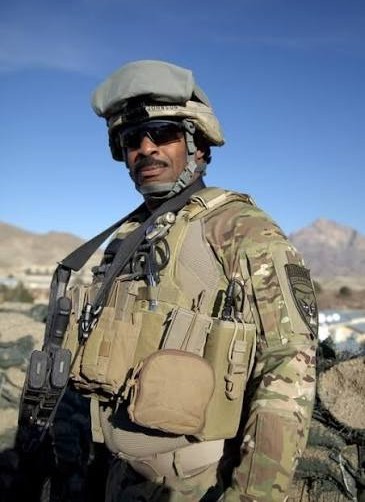
Commander's Welcome
Trauma is not weakness. It is physical biology.
"Welcome to the Battlefield & Brain Companion. Whether you served in the military, answer the call as a first responder, or are someone carrying the weight of a painful trauma · all are welcome here. Trauma isn't weakness; it's a physical imprint on the nervous system. Take a breath, use these tools, and know you don't walk this road alone."
- Lt. Col. Elton Johnson Jr. (Board Member Candidate & Advisory Council, Xycota Biosciences)
37 Years Military Service · 7 Combat Deployments · Decorated with Bronze Star, Defense Meritorious Service Medal, and Combat Action Badge
Autonomic Deck
Stanford Protocol
Ready
0
Tap Start to Begin
Cycle: 0 / 6
•
Elapsed: 0:00
How the Stanford Physiological Sigh Works:
Cyclic sighing consists of two rapid nasal inhales (3s deep inhale + 1s top-off sniff) followed by a 6s extended mouth exhale (10-second cycle). In 60 seconds, you complete 6 cycles. The double inhale reinflates collapsed pulmonary alveoli, while the extended exhale triggers the vagal brake to rapidly down-regulate heart rate and clear autonomic panic.
Tactical Summary
Use the 60s Sigh when acute chest tightness or panic spikes. Use Box Breathing before entering high-stress environments. Track your daily continuity in the Private Log to spot physiological triggers.